Practices to Prepare for a Good Death—and a Good Life
Today I’m happy to share an article I wrote for Spirituality & Health magazine featuring some of the deep wisdom and powerful practices I learned from Andrew Holecek at a workshop at Esalen Institute in Big Sur, California.

When a highly respected friend urged me to join her for a three-day workshop at the Esalen Institute on preparing for a good death, I agreed—though not without trepidation. What I never anticipated was that the practices I would learn about how to die well would simultaneously teach me essential lessons about how to live well.
The brilliant workshop leader, Andrew Holecek—an author of numerous books on Tibetan Buddhism, meditation, and lucid dreaming—is the creator of the Preparing to Die Program, which provides comprehensive spiritual and practical guidance for approaching death with understanding, grace, and confidence. As Holecek explained at the start of the retreat, “The collateral benefit of studying The Tibetan Book of the Dead is that it’s as much about living as it is about dying. These ancient teachings offer valuable preparation for all of life’s inevitable transitions—anything that begins and ends: a single breath, each day, every phase of our lives.”
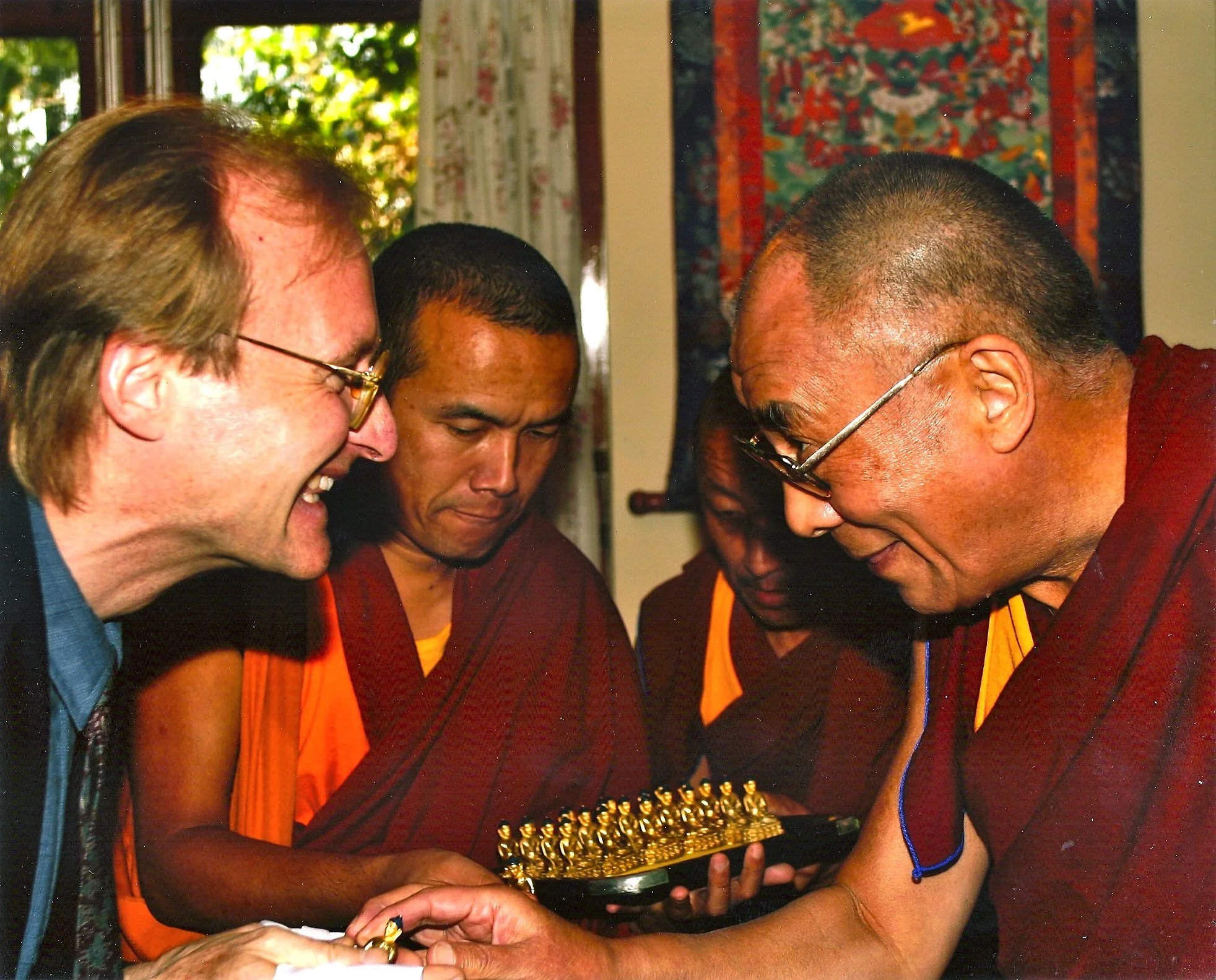
Andrew (left) with the Dalai Lama in India
In Tibetan Buddhism, the word “bardo” means gap or intermediate state. Traditionally, bardos refer to the transitional passages between death and rebirth—a period during which a person’s consciousness is no longer tethered to their body, and they have a unique opportunity for spiritual enlightenment. For this reason, The Tibetan Book of the Dead is read aloud to the dying or recently deceased to help guide them through those passages.
Holecek explained that the term bardo can also apply more broadly to any in-between state in our lives where the familiar has fallen away and what will come next hasn’t yet appeared. These innumerable transitions—be it shifts related to our home, family roles, relationships, work, health, or the identities we’ve grown accustomed to—can make us anxious, but they also hold great potential for awakening.
How We Learn to Let Go
Holecek says that much of the fear around death in our society stems from the fact that we’ve been trained by our family and culture to focus our attention outward on the material world. As a result, we identify most closely with what is visible and fleeting—our physical appearance, our accomplishments, our possessions.
“Think about it,” Holecek said while laughing. “How much time do we spend focused on the ego’s three main mantras: Me, me, me; Mine, mine, mine; and a worried Ay, yai, yai? We suffer in direct proportion to how much we identify with our ego and what is inherently impermanent—what we will ultimately lose.”
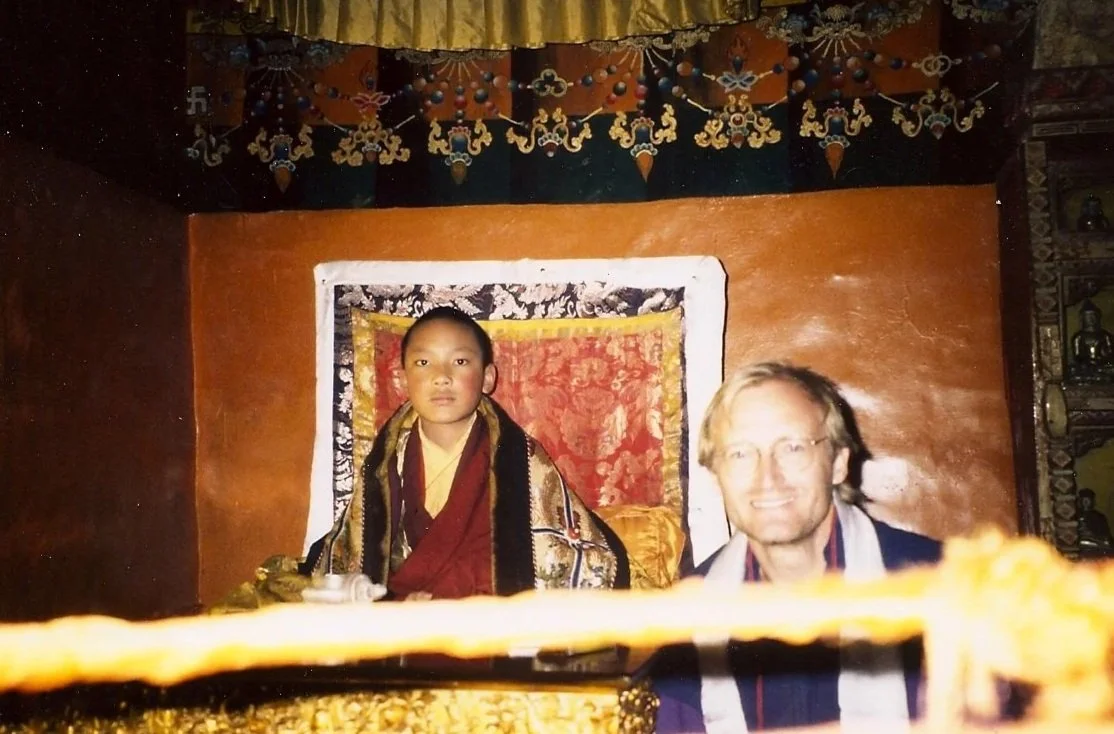
Andrew at the Sopa Choling retreat center during a three-year meditation retreat
According to Holecek, death only exists in the world of form. “Death is only the end when we think about ourselves as a separate, solitary individual. But in truth, death is like waking up from a dream. It is the great opening, when our perspective shifts from observing the universe to being the universe.”
From Insight to Embodiment: Three Short Practices
Holecek believes in the power of quick “industrial-strength” meditations that are extremely easy to incorporate into any busy life. They are designed to help us meet any type of uncertainty or difficulty with more confidence, acceptance, and openness by giving us a direct experience of our true nature—the part of us that will never die. We can begin to feel what that means not just as an idea, but as a lived experience.
1. One-Breath Meditation
Referring to this micro-practice as a “pause button,” Holecek says it’s designed to interrupt the automatic momentum of our unconscious mind, which generates 95% of our thoughts. “We can use a single breath to create space between a trigger and a reaction, interrupting the narrative that drives reactivity. The inhale mirrors birth; the exhale, death. Each breath becomes a rehearsal for letting go, as well as a quick way to touch into mindfulness any time throughout the day.”
Here’s what you do:
Inhale slowly, giving this one in-breath your full attention.
Exhale slowly with a sigh, giving this one out-breath your full attention.
Rest in the peace for a few moments.
Release the practice.
2. Flitting to Still Eyes
This practice can help us quickly gather our attention and initiate a state of calm. According to Holecek, our eyes mirror the state of our mind. When they dart rapidly from one thing to another, our breath becomes shallow, our thoughts scatter, and agitation rises. When our gaze softens and steadies, we settle down, our breath deepens, and our internal awareness grows.
Holecek explains, “In a world of constant scrolling and distraction, our eyes are continually drawn outward, pulled toward form and appearance. A restless gaze accelerates the mind’s habitual busyness, while a calm, steady gaze cultivates inner stillness and helps us stop identifying with our thoughts.”
Here’s what you do:
Let your eyes flit quickly around the room for a minute or so, and notice how frenetic this makes you feel.
Now still your eyes, decentralize your gaze, and open your visual field. Notice how collected, settled, and centered you feel.

3. Hand on Heart
Holecek teaches that beneath all emotions lies a vast, steady awareness that can hold everything we feel. The simple gesture of placing our hand on our heart can invite us to turn inward and meet ourselves just as we are with compassionate awareness, tenderness, and courage. It’s about being fully present with our humanity while getting more comfortable with experiencing discomfort.
“Each time we choose to feel rather than resist, we soften the grip of reactivity and strengthen our capacity to stay open through life’s inevitable difficulties and transitions,” Holecek says. “By practicing this now, we become accustomed to sensations we once pushed away. When fear or pain arises—whether in daily life or at the end of it—we’re able to recognize it as familiar territory rather than as something to fear. Every moment of radical acceptance helps set us free.”
Here’s what you do:
Place a hand over your heart and close your eyes. As you breathe, feel the warmth of your palm and the rhythm beneath it.
Allow yourself to feel whatever arises, pleasant or unpleasant, without trying to change it. Offer compassionate acceptance to whatever you feel.
If thoughts begin to swirl, simply notice and return to the sensations beneath your hand.
Celebrate each return as a strengthening of your awareness.
Keep breathing as you allow tenderness, love, and compassion to arise.

As we begin to trust the awareness beneath all of our thoughts, emotions, and sensations—the timeless part of us that can witness our experiences without being swept away by them—we expand our capacity to meet every transition with steadiness and compassion.
Holecek reminds us, “How we die is determined by how we live. When we connect to our deepest awareness and practice being present, open, compassionate, and steady with whatever arises, we are preparing ourselves to meet all of life’s challenges with courage, grace, and peace.”