Pause: Create an Inner Sanctuary
My father was born a daydreamer. Ever since he was a young boy growing up in a small town in Poland between the two world wars, his visualizations provided a respite from the hardships of his daily existence. “I can’t imagine what my life would have been like without the ability to dream,” he wrote in Quest for Eternal Sunshine. “I don’t think I could have survived more than a thousand days of extreme cruelty, starvation, and hard labor in the concentration camps without daydreaming. Even in the worst of times, through my daydreams, I was able to visualize new possibilities for myself.”
When my father embarked on his healing journey, visualization became his primary tool for reprogramming his mind and calming his nervous system. He wrote, “I realized that the origin of the information being fed into my brain really didn’t make a difference. Whether the input was an actual experience, an old memory, or a novel fantasy, my emotional responses were consistent and predictable: happy thoughts made me feel happy, and disturbing thoughts caused worry and upset. Therefore, my plan was to build an inventory of new, joyful thoughts and experiences in the same way I’d have learned how to play the piano: through practice and repetition.”
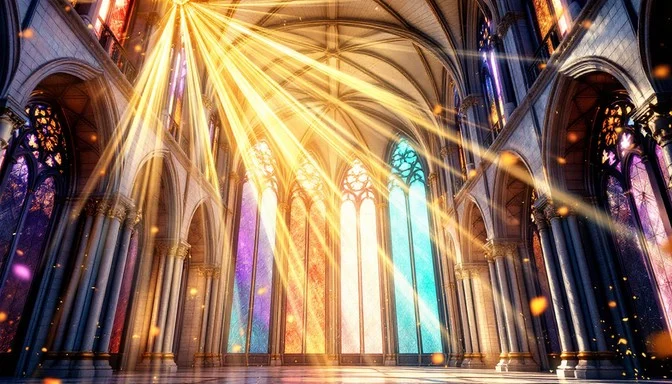
One of my father’s favorite visualizations was of a cathedral perched on the top of a tall mountain in a world made only of color. “Nothing existed but color, myself included,” he wrote. “Any words I uttered came out of my mouth as different hues. I loved to simply stand in this glorious cathedral, feeling bathed in a sea of delight and tranquility. I knew there was nothing else for me to do, nowhere else I needed to go. The silence, loveliness, and grace mesmerized me. The cathedral represented divine attributes buried deep within me, and I visited often.”
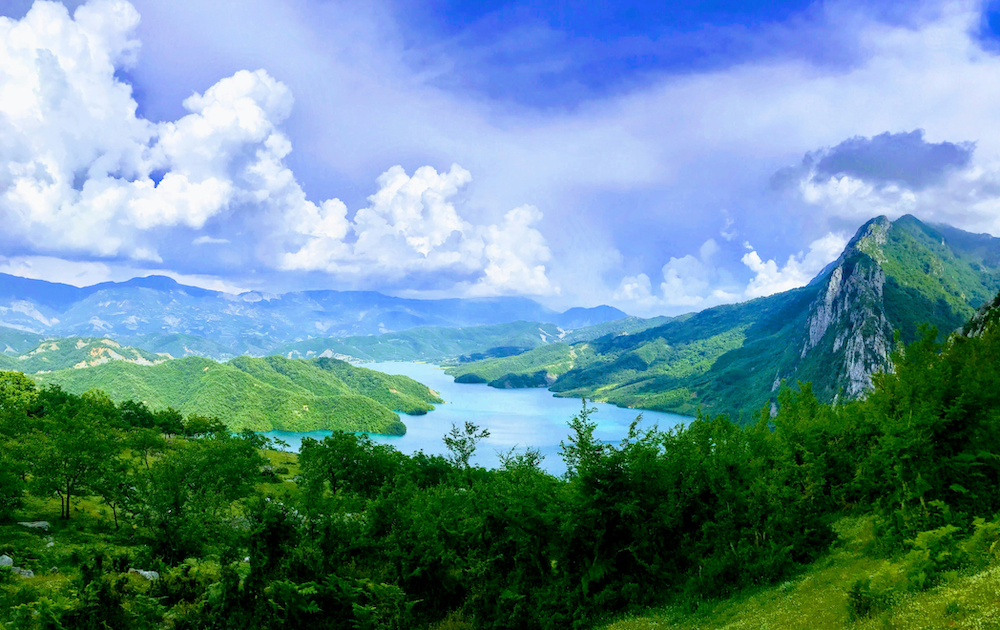
A whole chapter of Quest for Eternal Sunshine is devoted to my father’s most cherished visualization—his “sanctuary.” He wrote: “The most desirable piece of real estate I ever owned was located on a plateau in the midst of a beautiful mountain range, and it never cost me a cent. I called it ‘my sanctuary,’ and it was a place of rest and leisure where the health of my body and the well-being of my mind were restored and invigorated.”
My dad described the beauty of his sanctuary in great detail. It had a large waterfall-fed lake whose temperature was cool in the morning and warmer in the afternoon, but always inviting and soothing. No apples, pears, or apricots ever tasted as sweet as they did in his sanctuary, and the glorious flowers kept the air deliciously scented. There was a small, round house with huge windows framing magnificent views. Its large red oak doors had special hinges that enabled them to move with only the slightest touch of a finger despite their massive weight.
“The more I visited my sanctuary,” my father explained, “the sharper the focus and the more intense the experience. After many happy years, it became a part of my consciousness and an extension of myself. My sanctuary is still very much alive in me now, and I return to it whenever my needs or fancy take me there. I suspect that it exists on some level of reality that cannot be explained—a place that is open to the public, where everyone is welcome.”
If you're inspired to create your own inner sanctuary, try today's Take A Moment micro-meditation—“Your Safe Place”—where you’ll be guided to imagine a beautiful setting that invites peace and serenity.

Tiny pauses to be right here, right now can have big results. Visit and bookmark our library of thirty-four Take a Moment micro-meditations—all under two minutes long—that make taking mindful pauses as easy as possible. We invite you to "Take a Moment" to find the calm that is always within you.