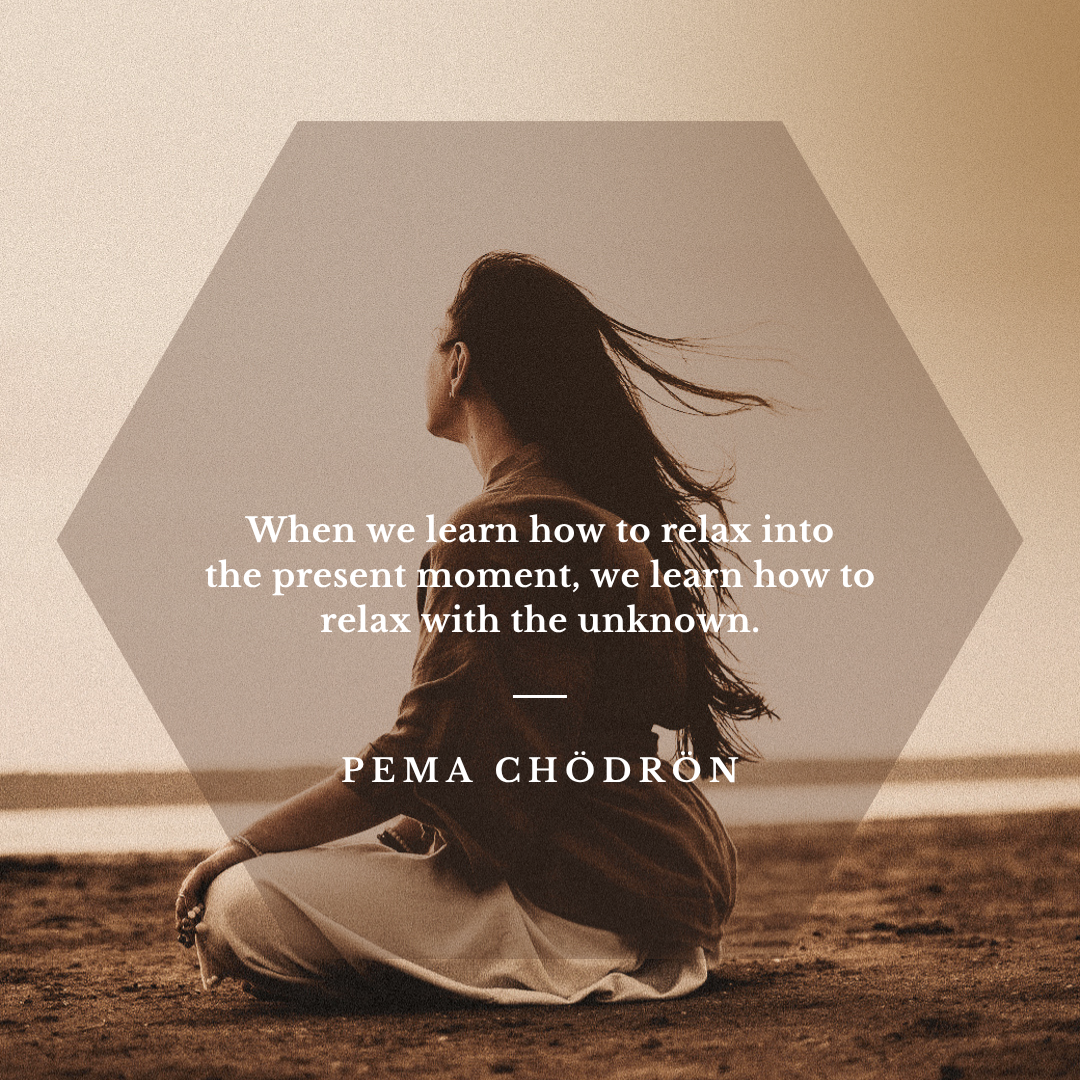
Pause: Breathe to Reset Your Nervous System
One of the most profound gifts of my qigong practice is how it has helped me become more aware of my breath. This awareness is incredibly empowering, because how we breathe has a dramatic impact on how we feel—and we can change our breathing pattern in an instant.
The deeply wise Vietnamese Zen Buddhist monk, Thich Nhat Hanh, offers this analogy for mindful breathing in his book, Peace Is Every Breath:
“It’s like when you’re flying in an airplane. Whenever severe turbulence comes along, the seatbelt keeps you from getting thrown around the cabin. Mindful breathing is your seatbelt in everyday life—it keeps you safe here in the present moment. If you know how to breathe, how to sit calmly and quietly, how to do walking meditation, then you have your seatbelt and you’re always safe.”
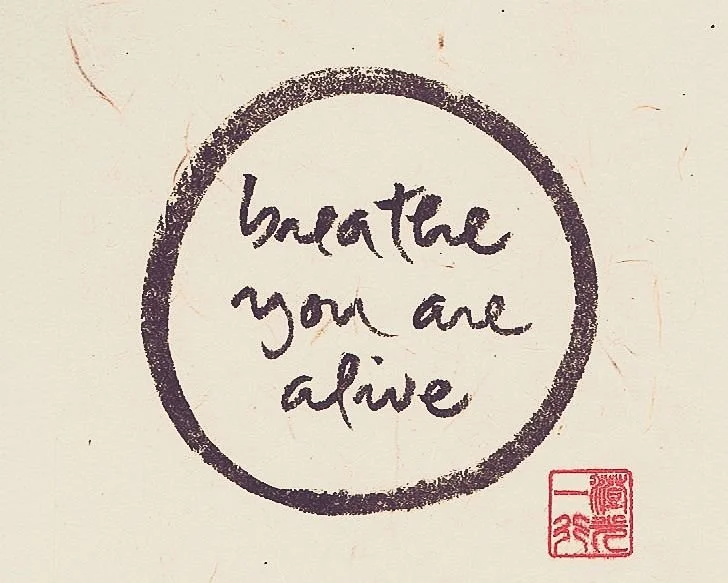
Calligraphy by Thich Nhat Hanh
My qigong teacher, Lee Holden, recently said, “The breath is the one place where the conscious mind and the unconscious body overlap. You can breathe without thinking about it, but you can also choose to slow it down, deepen it, change its rhythm. That makes it a bridge. The only system in your body that runs on autopilot but also responds to your intention.”
Today, I'm sharing my favorite breathing technique from Lee’s book, Ready, Set, Slow: “Vagal Breathing.” This has become my go-to practice whenever I’m feeling agitated or my mind won’t stop spinning. It focuses on an elongated exhale, which naturally soothes and settles the nervous system.
Lee often reminds people that we take roughly 20,000 breaths every day, and the way we breathe can either heighten tension or cultivate calm. Fast, shallow breathing signals danger, leaving us tense and overwhelmed. In contrast, slow, steady breathing signals safety, which helps the body relax.
This shift is closely linked to the vagus nerve, which extends from the brainstem down through the neck and chest and into the abdomen. When we breathe slowly and deeply, we stimulate this nerve, activating the parasympathetic “rest-and-digest” response and gently shifting the body out of stress mode and into a more restorative state.
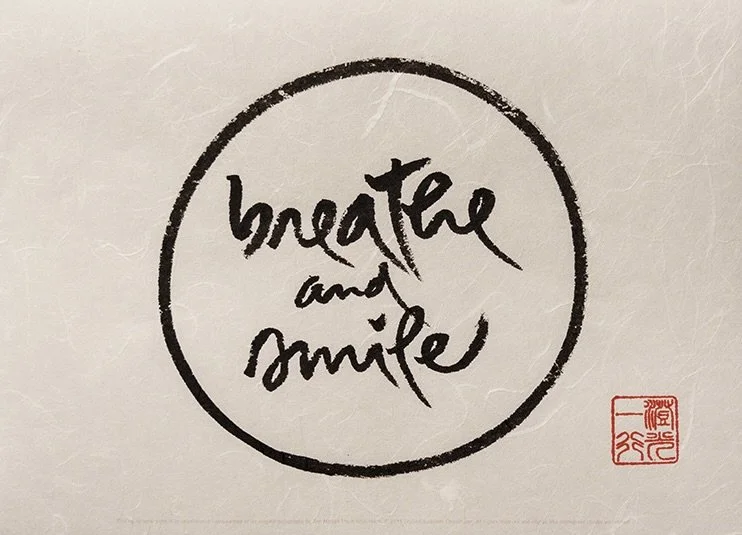
This simple vagal breathing practice can be done anytime, but it is especially helpful when you want to unwind or prepare for sleep. Like me, many people find it particularly effective at bedtime, helping to wipe the slate clean from a busy day.
Lee Holden’s Vagal Breathing Practice
Sit or lie down comfortably.
Place a hand on your belly so you can feel the diaphragm move.
Inhale through your nose for a count of four, allowing your belly to gently expand.
Hold for a count of two (softly, without strain).
Exhale slowly for a count of eight, letting the belly relax back in.
Pause briefly at the bottom of the breath before beginning again.
Repeat for several minutes, but please note that if this makes you feel lightheaded, you can shorten the exhale to four or six counts. Keep everything gentle and unforced; the breathing pattern should feel soothing.

I’m excited to share more of Lee’s wonderful practices with you next Saturday, April 18, at our free Quest for Eternal Sunshine workshop, “Discover the Magic of Qigong.” Please join us at 10:00AM Pacific/1:00 PM Eastern for an extra-special class.